

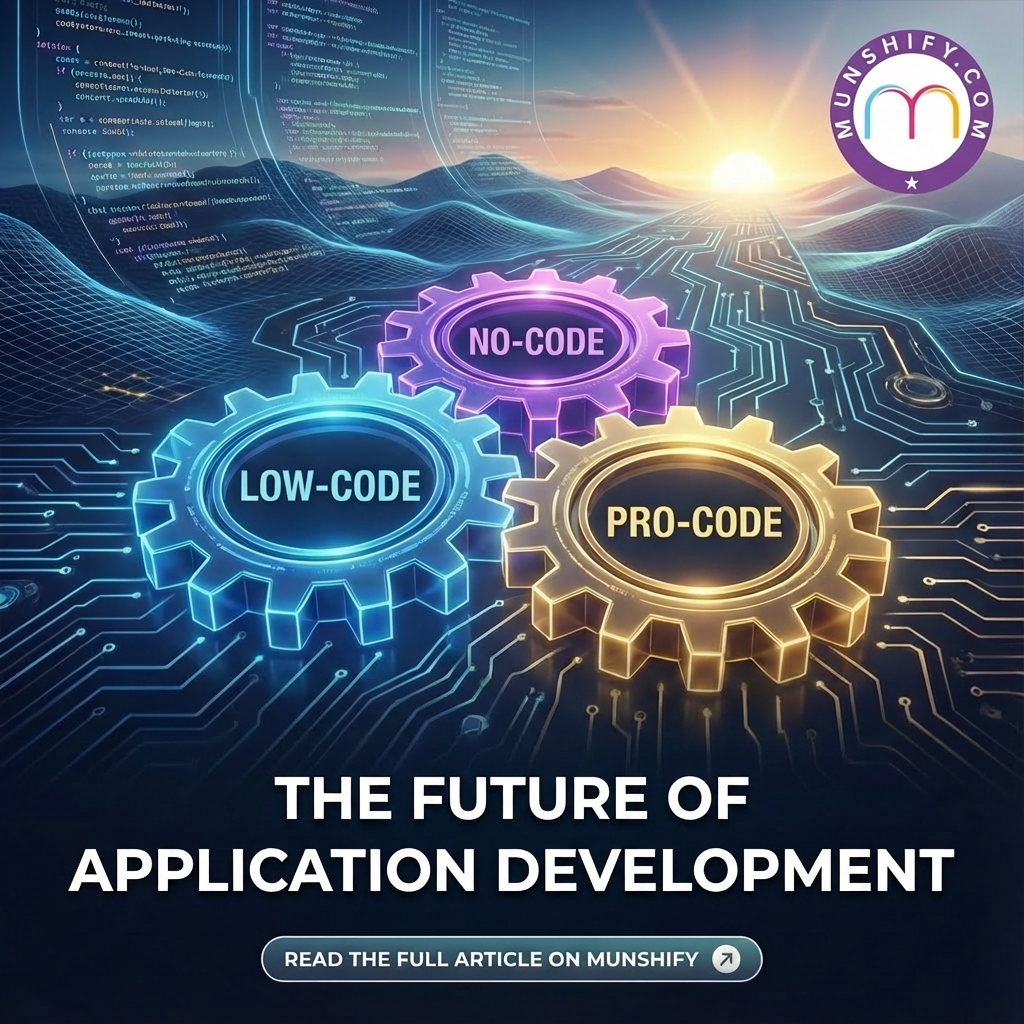
The software landscape is evolving faster than ever, and engineering teams are expected to deliver secure, scalable, and high-performing systems at an increasing speed. As a result, organizations are adopting multiple development approaches for low-code, no-code, and pro-code, to balance agility with long-term technical strength. Although each approach solves different challenges, technical leaders now face the critical task of determining where each methodology fits into their architecture strategy.
A Shift in Engineering Priorities
Digital transformation now requires faster delivery cycles without compromising reliability. According to Gartner, over 65% of application development activity will involve low-code or no-code platforms by 2027, driven primarily by the need to reduce delivery timelines. Yet, despite this shift, nearly 70% of enterprise systems still rely heavily on pro-code engineering for their core infrastructure.
This contrast highlights a simple truth: the future is not about choosing one approach, it’s about combining them strategically.
No-code: Expanding Problem-Solving Beyond Engineering Teams
No-code platforms allow non-engineering teams to build basic workflows, internal utilities, and prototypes without writing a single line of code. Even though they enhance productivity across departments, they remain best suited for lightweight use cases.
Technical leaders generally adopt no-code to reduce engineering backlog rather than replace software development. Moreover, scaling or integrating mission-critical systems still requires engineering-level oversight, which brings the conversation back to pro code capabilities.
Low-code: Accelerating Delivery While Maintaining Control
Low-code platforms help engineering teams move faster by reducing repetitive coding tasks. They offer visual builders, reusable components, and simplified integrations that shorten development cycles by nearly 40%, based on Forrester studies.
However, unlike no-code, low-code still enables engineers to write custom modules whenever needed. This blend of structure and flexibility makes low-code a valuable tool for modern engineering teams, but not a complete substitute for pro code systems, especially for high-impact applications or complex architectures.
Pro Code: The Foundation of Scalable, Secure, and Complex Systems
Despite the rise of visual development platforms, pro code remains the architectural core for systems that demand precision, deep customization, and long-term sustainability. Critical functions, such as distributed systems, advanced security frameworks, real-time data processing, and performance-driven services are built and maintained through traditional coding.
Furthermore:
- BCG reports that 87% of enterprise-grade applications still rely on custom-coded logic.
- Pro-code systems allow complete control over architecture, performance optimization, and security models.
- Engineering teams adopt pro code when applications are expected to scale across regions, devices, or infrastructure layers.
Simply put, pro code is not just a development style, it is the engineering backbone for resilient digital ecosystems.
Read our latest blog: https://munshify.com/blog/digital-transformation-maturity-model-building-a-future-ready-organization/
How Low-code and No-code Are Driving the Next Wave of Growth
After understanding the roles of low-code, no-code, and pro code individually, it becomes clear why low-code and no-code are accelerating industry growth at an unprecedented pace. They are not replacing traditional engineering, they are amplifying it.
Key drivers include:
- Rapid prototyping and deployment
Teams can turn ideas into functioning applications in days instead of months.
- Reduced dependency on specialized engineering bandwidth
This allows engineering teams to focus on complex, high-impact work.
- Faster iteration cycles
Changes in business processes can be implemented immediately without full release cycles.
- Cross-team collaboration
Business users, analysts, and engineering teams can collaborate more fluidly.
This rise in adoption is reshaping how organizations think about digital innovation. Low-code and no-code platforms are becoming the first layer of development, handling automation, workflows, and process-driven applications, while pro code handles the deeper engineering challenges.
This is precisely where platforms like Munshify Crafter fit into the future of development. They empower teams to build quickly, automate processes, and reduce engineering load, while still allowing seamless integration with traditional pro-code systems when the architecture demands it. The result is a balanced development model that supports speed, scalability, and engineering discipline.
A Shift in Engineering Priorities
Digital transformation now requires faster delivery cycles without compromising reliability. According to Gartner, over 65% of application development activity will involve low-code or no-code platforms by 2027, driven primarily by the need to reduce delivery timelines. Yet, despite this shift, nearly 70% of enterprise systems still rely heavily on pro-code engineering for their core infrastructure.
This contrast highlights a simple truth: the future is not about choosing one approach, it’s about combining them strategically.
The development ecosystem is undergoing a significant transformation, but the fundamentals remain unchanged. While low-code and no-code platforms increase speed and accessibility, pro code continues to deliver the precision, reliability, and scalability that enterprise systems demand. As organizations move toward hybrid development models, engineering leaders will play a key role in deciding where each approach fits effectively. In the end, pro code remains central to building robust digital foundations that can evolve with tomorrow’s requirements.
FAQs
1. Will pro code remain relevant as low-code and no-code adoption increases?
Yes. Even as visual platforms grow, enterprise systems still rely on pro code for security, performance, and architectural scalability.
2. Can low-code platforms handle complex workflows?
They can handle moderately complex applications, but deeply customized logic still requires pro code.
3. Should engineering teams fully shift to low-code systems?
Not entirely. Low-code accelerates delivery but complements, not replaces traditional pro code engineering.
4. Is a hybrid development model ideal for most organizations?
Yes. Combining low-code, no-code, and pro code offers a balanced approach that supports both speed and long-term technical stability.